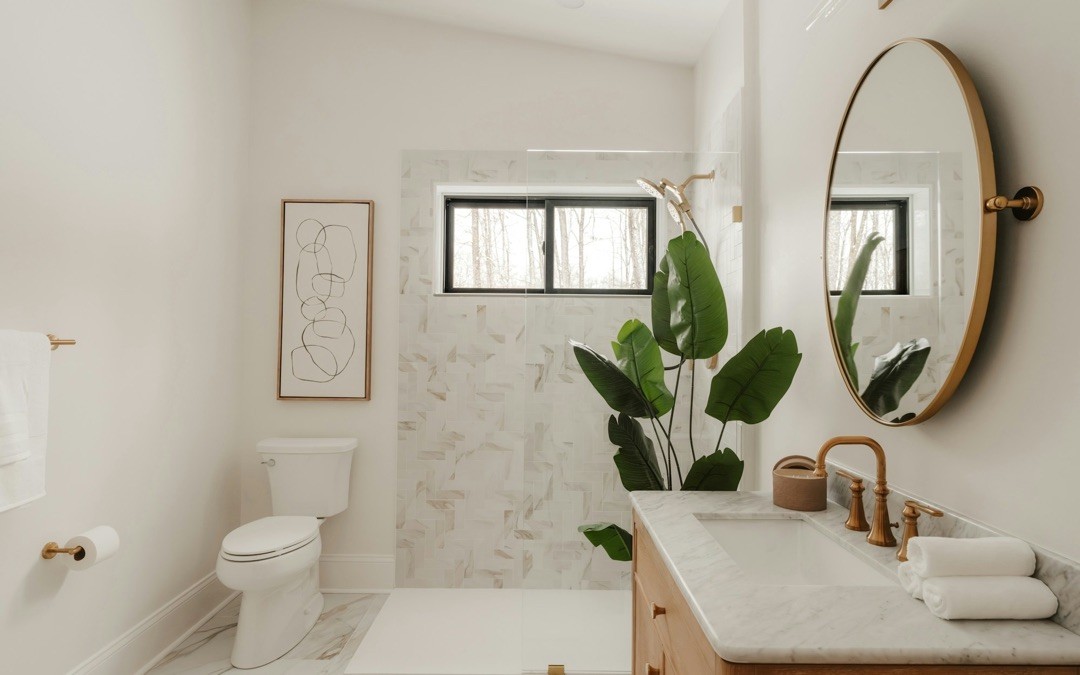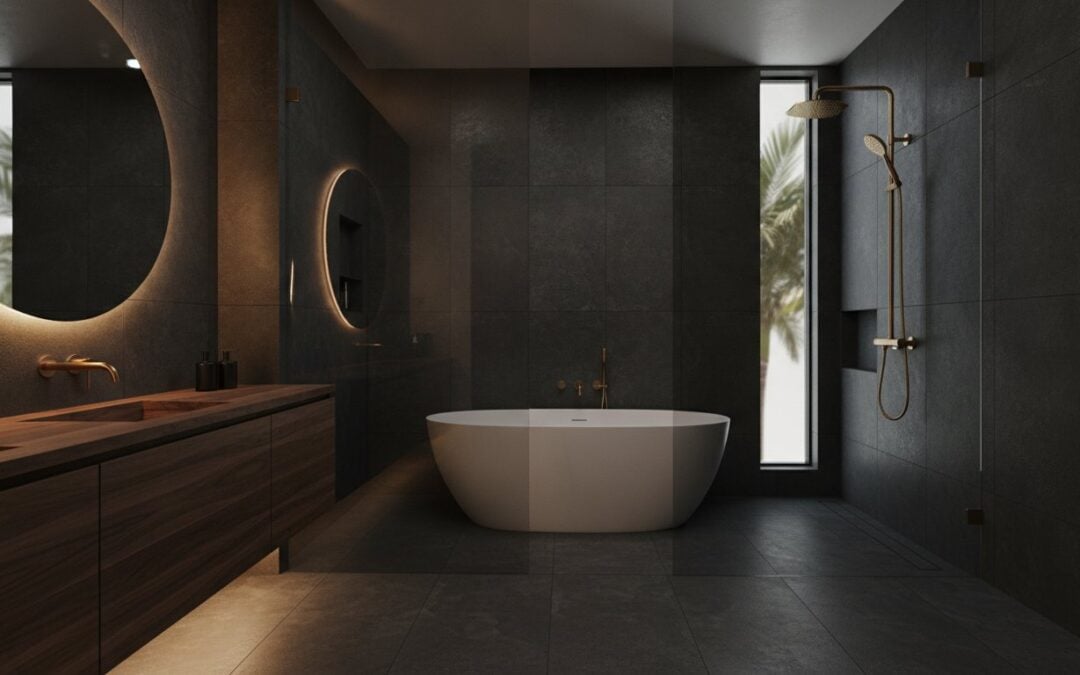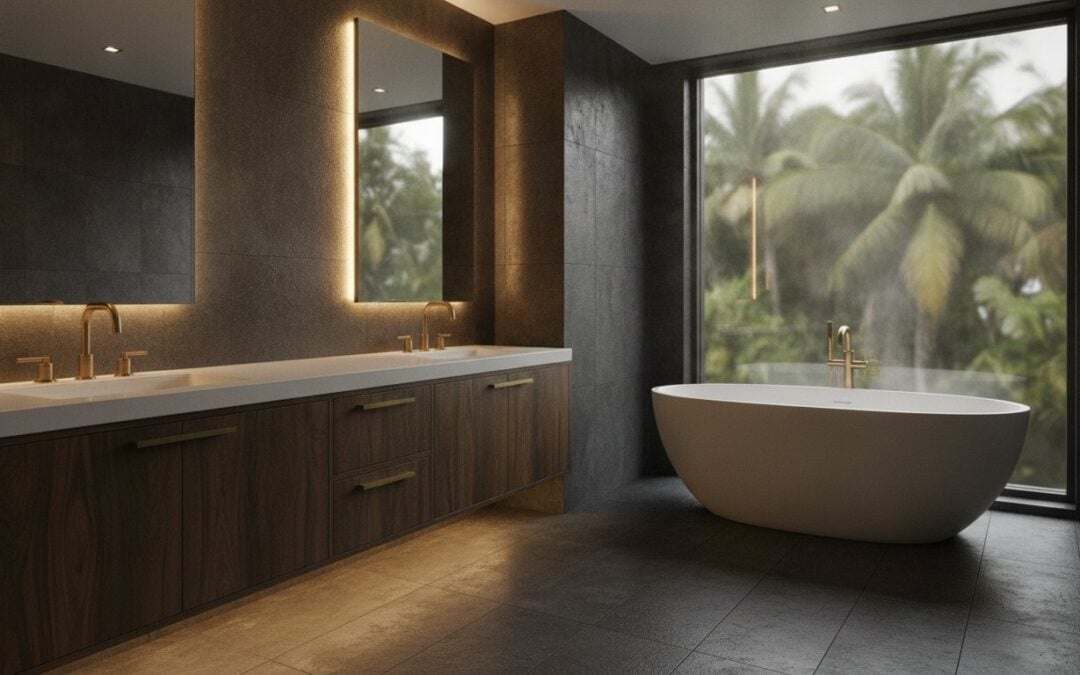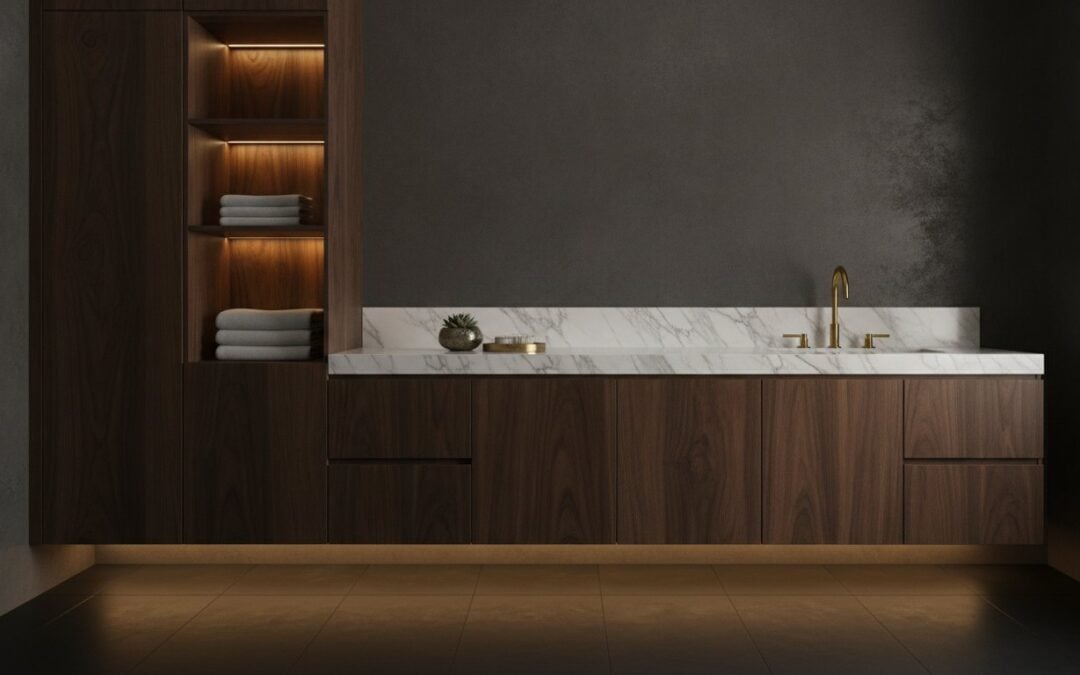
Most bathroom remodeling ideas are photographed in dry, evenly lit studios. A Tampa Bay bathroom lives somewhere else entirely. Warm, wet air settles into it for much of the year, salt rides the breeze a few blocks from the water in St. Pete and Clearwater, and the sun that pours through a west-facing window at four in the afternoon is strong enough to change how a white wall, a marble slab or a brass faucet looks. A finish that is lovely in a catalog can cloud, swell, tarnish or fade here within a few seasons.
This guide is a local filter for luxury bathroom ideas. Room by room, it covers which tile, shower, fixture, vanity, ventilation, lighting and tub choices look refined and also hold up in Tampa Bay homes, along with what to ask before you commit to each one. If you’re ready to talk about your own room, our bathroom remodeling page explains how we plan and build primary suites, guest baths and powder rooms.
Key Takeaways
- Design for three local conditions at once: humid air most of the year, salt air near the water, and bright, low-angle sun. The best bathroom remodeling ideas here answer all three.
- Large-format porcelain gives you the look of stone with almost none of the upkeep, and fewer grout lines for moisture and mildew to find.
- Choose fixture finishes by how they are made, not just their color. PVD finishes over solid brass bodies keep their look far longer in salt air than ordinary plated finishes.
- A vanity has to be built for humid air: a plywood box, sealed on every side and every cutout, with a top that suits the light it will sit in.
- Ventilation is the most important feature you will never notice. A correctly sized, quiet fan that vents outdoors protects every finish in the room.
- Test colors, stone and lighting in your own bathroom at different times of day. Florida sun shifts how everything reads.
What Tampa Bay’s Climate Asks of a Bathroom
Before choosing a single finish, it helps to know what it will be up against.
- Humidity that rarely lets up. From late spring into fall, the outdoor air is warm and heavy, and every shower adds more moisture to a room that is already close to its limit. Grout, caulk, paint, wood and the back of the drywall all feel it. Opening a window helps less than you would expect, because the air coming in is wet too.
- Salt air near the water. In waterfront and near-the-Gulf homes, from Snell Isle and Shore Acres to the Clearwater beaches, airborne salt settles on metal and glass. Exposed hardware, cheap plating and window frames show it first.
- Strong, angled light. Bright sun through a bathroom window is one of the great pleasures of living here. It also fades some materials, heats the room, glares off polished surfaces and makes a color that looked soft on a sample card read cold or yellow on the wall.
- Older houses with their own quirks. Mid-century slab homes, bungalows on raised wood floors and coastal condos each bring different plumbing, framing and association rules to a remodel.
None of this rules out a luxurious bathroom. It just means the ideas worth borrowing are the ones built with these conditions in mind.
Idea 1: Large-Format Porcelain That Reads as Stone
If one material has changed what a high-end bathroom looks like in Florida, it is large-format porcelain. Today’s marble-, limestone- and travertine-look porcelain is convincing even up close, and it comes in sizes from 24 by 48 inches up to full slabs that can clad a shower wall with no grout lines at all.
Why it works here:
- It barely absorbs water. Porcelain is defined by its very low absorption, a half percent or less, so it doesn’t darken, stain or harbor mildew the way porous stone can.
- Fewer grout lines. Grout is where moisture, soap and mildew collect. Big tiles mean far less of it, and a high-performance or epoxy grout in the shower is denser and easier to keep clean than standard cement grout.
- It shrugs off sun. Porcelain’s color is fired in, so a window-side floor won’t fade.
Two things make large tile look expensive rather than ordinary. The first is a flat floor: large tiles need a substrate laid dead flat and a leveling system during installation, or the edges catch the low afternoon light and every slight lip shows. The second is the surface. Polished porcelain is beautiful on walls, but on the floor, and especially in the shower, choose a honed or lightly textured finish rated for wet areas. Ask for the tile’s wet slip rating; a dynamic coefficient of friction of at least 0.42 is the common benchmark for level interior floors that get wet.
Real marble still has a place. It is softer and more porous than porcelain and etches when acidic cleaners or cosmetics touch it, so in a humid, hard-working bathroom it is happiest on a feature wall, a tub surround or a powder room vanity where you can accept the patina it gains with time.
| Surface | How it looks | In Tampa Bay humidity and light | Care |
|---|---|---|---|
| Large-format porcelain | Marble, limestone or concrete looks, few grout lines | Doesn’t absorb water or fade in sun | Soap and water; no sealing |
| Natural marble | Unique veining, soft depth | Porous; etches and can stain; best away from heavy splash | Regular sealing; pH-neutral cleaners only |
| Zellige and handmade tile | Glossy, irregular, full of movement | Beautiful in light; more grout and more variation | Sealing for some clays; careful grout choice |
| Small mosaic | Classic, textured | Good grip on shower floors; many grout lines | Dense grout and regular cleaning |
Idea 2: An Open, Walk-In Shower with Clear, Low-Iron Glass
The walk-in shower has replaced the tub as the centerpiece of most primary bathrooms we build, and here it does double duty. Fewer framed doors and curbs mean fewer seals and corners for water and mildew to find, and a frameless glass panel lets daylight from the window carry across the whole room.
- Low-iron glass removes the green tint of standard glass, so the tile behind it reads true in strong sun.
- A factory-applied protective coating makes water bead and run off, which matters in an area with mineral-heavy water. Spots on glass are the first thing that makes a new shower look old.
- Glass taken close to the ceiling, or a transom, holds more steam inside the shower instead of releasing it into the room.
- Hardware in a durable finish, matched to the rest of the fixtures, so hinges and clamps don’t corrode or pit near the water.
Under the tile, the shower needs a continuous waterproofing membrane on walls and floor, bonded to the drain and flood tested before any tile is set. Going curbless takes extra floor work; our guide to planning a curbless shower walks through what that involves in St. Pete homes.
Idea 3: Fixtures and Finishes That Stand Up to Salt Air
Brushed brass, champagne bronze, polished nickel and matte black all have a place in a luxury bathroom. What separates the ones that last near the coast is how the finish is made and what is underneath it.
- Solid brass bodies. Look for faucets, shower trim and valves with solid brass or stainless bodies rather than zinc or plastic under a plated skin. They resist corrosion from the inside out and feel noticeably more substantial.
- PVD finishes. Physical vapor deposition bonds the finish to the metal at a molecular level. PVD brass, gold and nickel tones are much harder and far more resistant to tarnish and scratching than standard electroplated finishes, which makes them a smart choice for homes near the water.
- Living finishes, chosen on purpose. Unlacquered brass is designed to darken and develop a patina, and in salt air it will do so quickly. Some homeowners love that; just choose it knowing what you’re getting.
- Marine-grade stainless for exposed metal. For towel bars, robe hooks and grab bars in a waterfront home, or an outdoor shower off the pool, 316 stainless resists salt corrosion better than the more common 304.
- Thermostatic valves. A thermostatic shower valve holds the temperature you set, and handles the drop in pressure when someone runs water elsewhere in the house. It is one of the upgrades our clients notice every single day.
Keep one metal finish throughout the room, from faucet and shower trim to mirror frame and light fixtures. A single, well-chosen finish looks deliberate in strong light; three competing ones look busy.
Idea 4: A Vanity Built for Humid Air
The vanity is furniture that lives in a steam room, and in Tampa Bay that is where off-the-shelf pieces fail first: doors warp, edge banding peels and particleboard swells around the sink.
- Box construction. Plywood cabinet boxes hold their shape and screws far better in humidity than particleboard or standard MDF. Moisture-resistant MDF can work well for painted doors.
- Sealed on every surface. A good vanity is finished on the back, underside and inside the sink base too, with every plumbing cutout sealed. Moisture finds bare edges.
- A floating design. A wall-hung vanity lets air move underneath, keeps it clear of a wet floor and makes the room feel larger. Built-in toe-kick lighting doubles as a soft night light.
- Tall storage on the wall. A vanity with a tall cabinet keeps towels and supplies behind doors and off open shelves, where they gather humidity and dust.
The top should suit the light it will sit in. Quartz is non-porous and easy to live with, but many quartz products are not meant for prolonged direct sun and can discolor if a window bakes them every afternoon. Porcelain slab tops are color-stable in sunlight. Quartzite is a hard natural stone that handles light well but needs periodic sealing. Marble brings unmatched character and asks for the most care. We look at where the sun falls on your vanity before recommending any of them.
Idea 5: Ventilation You Never Notice
The most important upgrade in a Tampa Bay bathroom is one you will rarely think about once it is done. Without good ventilation, the most expensive finishes in the room will mildew, peel and warp.
- Vent outside, every time. An exhaust fan has to discharge through a roof or wall to the outdoors, not into the attic or toward a soffit vent where the moist air gets pulled back in. During demolition we check whether the existing fan actually vents out; in older homes it often doesn’t.
- Size it to the room. A common guideline is one cubic foot per minute of airflow for every square foot of floor, with at least 50, and more for large primary suites, steam showers and jetted tubs.
- Make it quiet. Fans are rated in sones. A fan around 1 sone or less is quiet enough that people actually leave it running.
- Let it run itself. A humidity-sensing control or a timer keeps the fan going after a shower until the room has cleared, then shuts it off.
- Don’t forget the air conditioning. A bathroom with a conditioned air supply dries much faster than one that relies on the fan alone. In a large primary suite, it is worth checking that the supply and return are sized for the room.
For a steam shower, ventilation and sealing go further still: a vapor-tight enclosure, a sloped ceiling so condensation runs down the wall, and a dedicated electrical circuit for the generator.
Idea 6: Design With the Light, Not Against It
Natural light is what makes a Florida bathroom feel like a retreat. Using it well means managing heat, glare and privacy as carefully as the view.
Windows, privacy and heat
- Bring light in high. A clerestory window, a transom over the shower or a window set above the tub brings in sky and sun without exposing you to the neighbors.
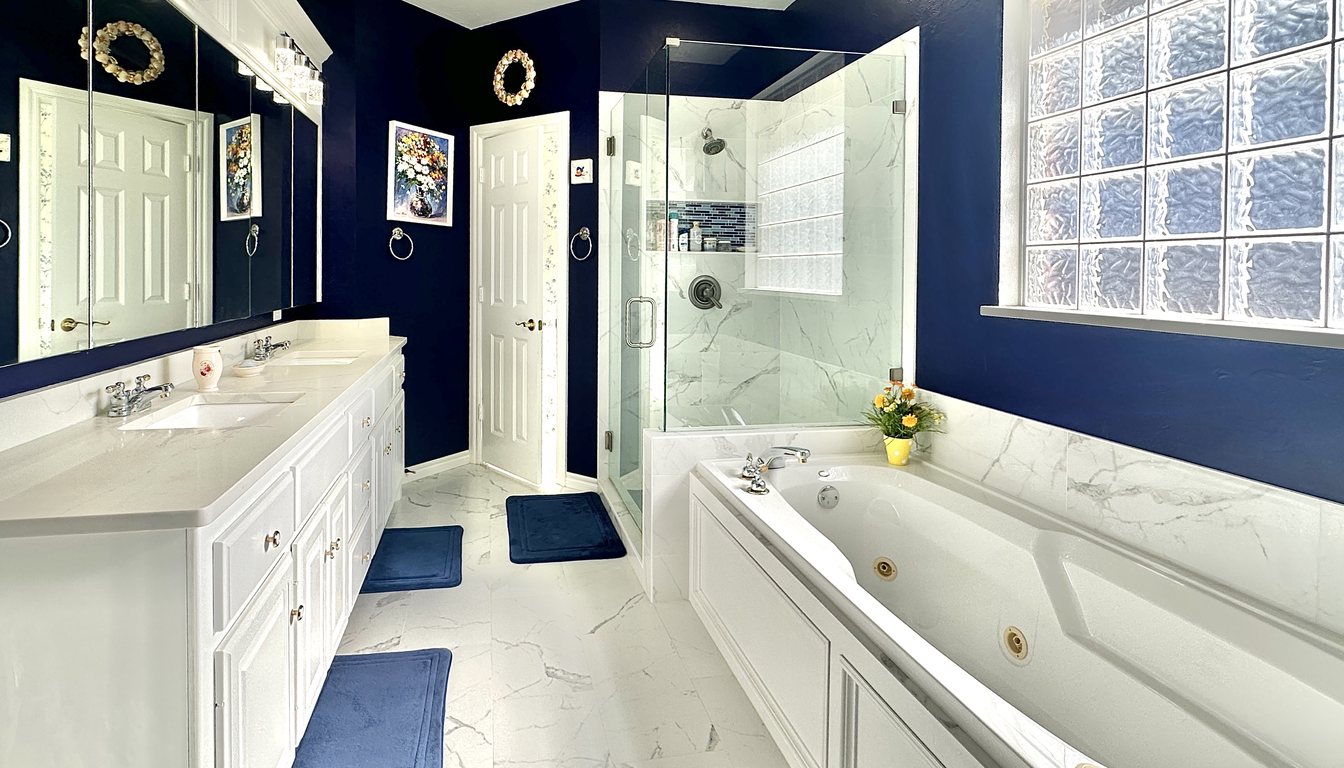
- Use privacy glass where you need it. Frosted, reeded or obscured glass softens hard sun into an even glow, which is often more flattering than a clear pane. Glass block, found over the tub in many Florida homes of the 1990s, does the same job and can be kept, refreshed or replaced with a modern window.
- Control heat and fading. Low-E glass cuts the solar heat a west-facing window lets in and filters much of the UV that fades fabrics and some finishes.
- Meet Florida’s wind rules. A new or enlarged bathroom window has to meet the state’s wind-load requirements, and in much of the coastal Tampa Bay area that means impact-rated glass or approved protection. Plan it into the budget and the permit from the start.
- Consider a tubular skylight for an interior bathroom with no outside wall. It brings real daylight into a windowless room through a small roof opening.
Color in Florida sun
Strong, warm sun can make a crisp white look stark and a creamy one look yellow, and a blue-gray can read nearly purple by late afternoon. Before you commit, put large paint samples and actual tile and stone pieces in the room and look at them in the morning, mid-afternoon and under the evening lights. Warm whites, soft limestone and sand tones, and coastal blues and greens with a touch of gray tend to hold their character across the day. For walls outside the tile, use a mildew-resistant bathroom paint in a satin or semi-gloss sheen that can be wiped down.
Layered lighting for after dark
When the sun goes down, the room needs its own light, in layers:
- Mirror lighting at face height, from sconces either side or a lit mirror, so your face is evenly lit without shadows from above.
- Wet-rated recessed lights in the shower and over the tub.
- Soft ambient light, such as a cove, toe-kick or under-vanity strip on a dimmer, for evenings and nights.
Choose warm LEDs, around 2700K to 3000K, with a high color rendering index of 90 or more so skin tones and stone look natural, and put every layer on dimmers. Our electrical team designs and permits the circuits, fixtures and GFCI protection a bathroom needs.
Idea 7: Rethink the Jetted Tub
Many Tampa Bay homes built in the 1990s and 2000s have a large deck-mounted jetted tub under a window, often surrounded by a wide tiled platform. If yours is rarely used, it may be the biggest opportunity in the room.
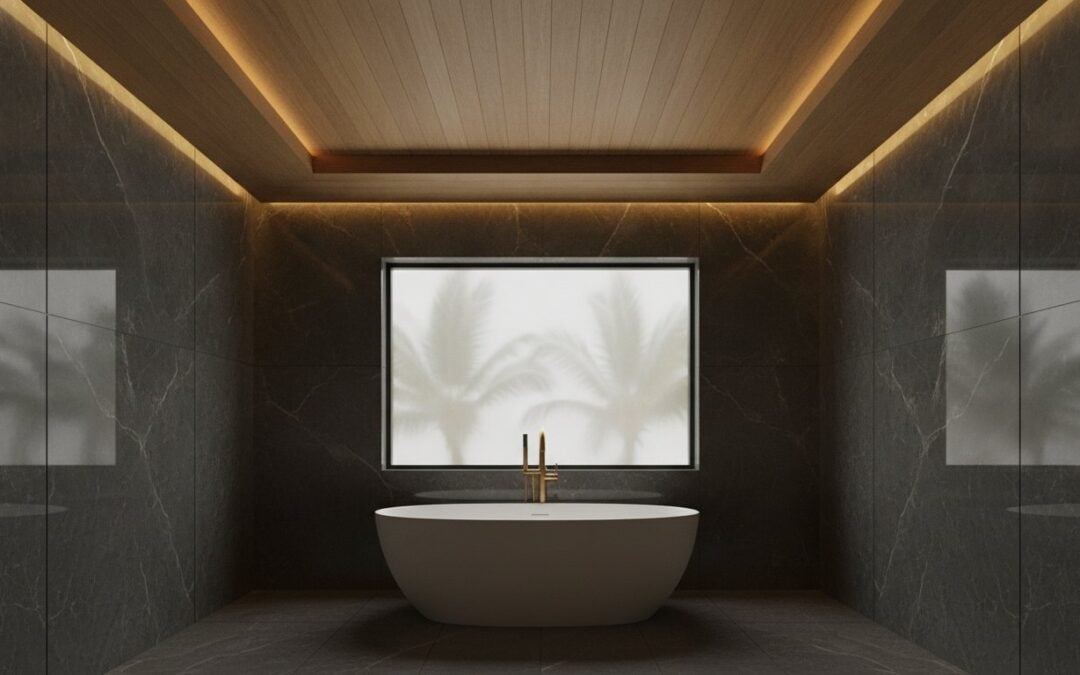
- Replace it with a freestanding tub. A sculptural soaking tub in front of the window becomes the focal point of the room, and the floor around it is far easier to clean than a tiled deck.
- Trade it for a larger shower. Many couples would rather have a generous walk-in shower with a bench and two shower heads than a tub they never fill.
- Keep the jets, but upgrade them. If you love a jetted bath, consider an air bath. Whirlpool tubs recirculate bath water through jet lines that can hold residue; air baths push warm air through small openings and purge themselves after use, which is easier to keep clean in a humid house.
Whatever you choose, the area around the tub needs the same waterproofing attention as the shower, especially under a window where splash and condensation collect on the sill.
Idea 8: Quiet Comforts That Add Up
- A wall-hung toilet with an in-wall tank saves floor space and makes the floor easy to mop. A bidet seat needs a nearby outlet, which is far easier to plan now than add later.
- Radiant floor heat sounds unnecessary in Florida until you step onto cold tile on a January morning. It also helps the floor dry faster after showers.
- A recessed niche keeps bottles off the floor and the shower ledge. Keep it off exterior walls where possible, so the insulation and waterproofing behind it aren’t compromised.
- Blocking in the walls while they are open, so grab bars, a heated towel rail or a future mirror can go anywhere without hunting for studs.
- A defogging mirror or a mirror with integrated lighting clears in seconds after a hot shower.
Where Your Home Sits Changes the Plan
The same ideas apply across Tampa Bay, but the details shift with the house.
- Waterfront and near-the-Gulf homes in St. Pete and Clearwater deserve the most attention to salt-resistant metals, window frames and glass hardware. Many also sit in flood zones, where local rules compare the cost of improvements with the value of the building, so it’s worth checking how a larger remodel fits that math before design is finished.
- Bungalows on raised wood floors, common in older St. Pete neighborhoods, need a stiff, flat floor under large tile and a careful look at the crawlspace below the bathroom, which can be damp itself.
- Mid-century slab homes across Tampa and St. Pete often hide original cast iron drains under the bathroom floor. If the floor is coming up anyway, it’s the right moment to replace them.
- Condos along the beaches and downtown waterfronts bring association approvals, limits on noisy work hours and, often, rules about what can change in the floor and plumbing stacks.
What’s the Newest Trend in Bathrooms?
The strongest direction in luxury bathrooms right now is the bathroom as a calm, well-made room rather than a showcase of features. In practice that means walk-in and curbless showers, large-format stone-look surfaces with very few grout lines, warm wood vanities that float off the floor, freestanding tubs in place of decks, brushed and warm metal finishes, and lighting in layers on dimmers. Wellness features like steam showers and thermostatic controls are growing too. Every one of these happens to suit a Tampa Bay home well, as long as it is built for the humidity behind it.
What Does a Bathroom Remodel Cost in Tampa Bay?
Every bathroom we build is priced to its own layout and selections, so we don’t publish set prices. The cost is driven far more by what changes than by the size of the room:
- Layout and plumbing. Keeping the toilet, shower and sinks where they are costs much less than moving them, especially on a slab.
- The shower. Waterproofing, tile, glass and valves pack a lot of labor and material into a few square feet, and a curbless or steam shower adds more.
- Surfaces. The amount of tile or stone, and whether it goes floor to ceiling.
- Selections. Fixtures, the vanity and its top, lighting and glass are where your choices move the number most.
- What the house reveals. Old drain lines, a fan that never vented outside or water damage behind a tub are common in older homes, so a contingency belongs in every budget.
A realistic budget starts with the scope you want, priced with your actual selections. If resale is part of your thinking, weigh the project against how long you plan to stay and how the rest of the house compares.
Choosing a Bathroom Remodeling Contractor in Tampa Bay
So much of a good bathroom is hidden behind tile that the company you hire matters as much as the ideas you choose. When you compare remodelers, ask:
- How do you waterproof the shower and the rest of the floor, and do you flood test before tile?
- Where will the exhaust fan vent, and how do you size it?
- Which fixture and hardware finishes do you recommend near the water, and why?
- How are your vanities built, and how are the backs and cutouts sealed?
- Who pulls the permits, and are the plumber and electrician licensed for this work? You can verify a Florida contractor’s license with the Department of Business and Professional Regulation.
- Can I see finished bathrooms and speak with the homeowners, and what warranty paperwork do I receive at handover?
Our checklist for choosing a luxury remodeling contractor in Tampa goes further into how to compare bids line by line.
Your Bathroom, Designed and Built by Ethicore
Ethicore is a design-build remodeling company serving St. Petersburg, Tampa, Clearwater and the wider Tampa Bay area. We remodel primary suites, guest baths and powder rooms, from new layouts and curbless showers to vanities, tile and lighting. Our designers help you choose every finish with your light, your exposure and the way you live in mind, and the same team handles the plumbing, waterproofing, electrical, permits and finish work, so the parts you see and the parts you don’t are built to the same standard.
With more than 40 years of experience and over 1,300 completed projects, we stand behind our workmanship, and products and materials carry their manufacturers’ warranties, with the paperwork handed to you at the end. Every project begins with a complimentary consultation. Book yours, and bring the photos and ideas you’ve been collecting; we’ll tell you which ones will thrive in your home.
Frequently Asked Questions
What’s the cost to remodel a bathroom?
It depends on how much changes. A refresh that keeps the layout and replaces surfaces and fixtures costs far less than a remodel that moves plumbing, rebuilds the shower or changes the floor. Plumbing and layout changes, the shower, the amount of tile or stone and your fixture and vanity selections drive most of the cost. A written quote based on your layout and actual selections is the number worth comparing, and we can walk through typical ranges for your project at a consultation.
What is the 30% rule for renovations?
It is a rule of thumb suggesting you keep total renovation spending to roughly 30 percent of your home’s value, so you don’t invest more than the house or neighborhood is likely to return when you sell. It is a gut check, not a regulation. A bathroom is usually a modest share of that figure, and homeowners who plan to stay often weigh how they want to live in the house as heavily as resale.
What is a remodeling specialist?
A remodeling specialist is a contractor who focuses on changing existing homes rather than building new ones. They know how to work with existing plumbing, framing and finishes, and how to plan for what older houses reveal once they are opened. A design-build remodeler like Ethicore also designs the space, so the person who plans your bathroom and the team who builds it work together from the first sketch to the final inspection.
What are the best materials for a bathroom in Florida humidity?
Porcelain tile for floors and walls, high-performance or epoxy grout in the shower, a continuous waterproofing membrane behind the tile, plywood vanity boxes sealed on every side, fixtures with solid brass bodies and PVD finishes, and mildew-resistant paint outside the tile. Pair them with an exhaust fan that vents outdoors and is sized for the room.
Is marble a good choice for a Tampa bathroom?
It can be, if you choose where it goes. Marble is porous and etches with acids, so it needs sealing and gentle cleaners, and it ages with a soft patina. Many clients use marble for a vanity top, a feature wall or a powder room, and choose marble-look porcelain for floors and shower walls that see constant water.
How do I find the best bathroom remodeling contractors near me?
Look for a licensed and insured company that pulls its own permits, can explain its waterproofing, ventilation and finish choices for local conditions, and can show you finished bathrooms similar to the one you want. Compare detailed written quotes that price your selections, read reviews, speak with past clients and choose the team that answers questions about the hidden work as clearly as the finishes.